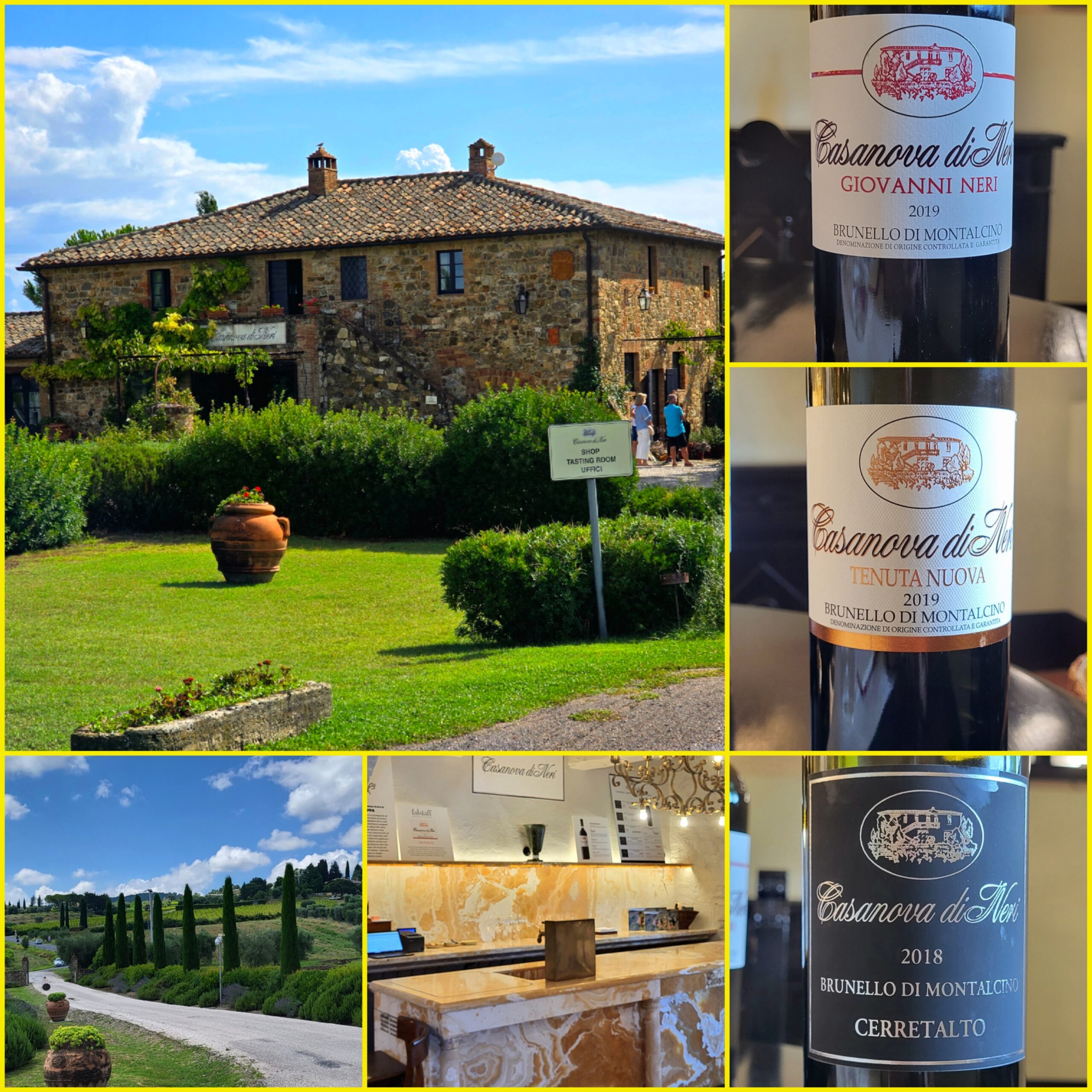
Casanova di Neri: the courage of vision, the strength of terroir
The story of every winery is unique, just as unique is the work carried out there and the wines that are born from it.
In the 1960s, after the abolition of the sharecropping system, a period of major transformation began in Montalcino’s agriculture. Low vineyard prices, combined with the charm of a territory naturally suited to wine production, attracted new buyers: the future producers of Brunello.
At that time, Brunello was not yet recognized as one of Italy’s great red wines, but these pioneers chose to invest in the land of Montalcino to fulfill a dream: to create wines of the highest quality. About ten new wineries were established, bringing not only financial resources but also fresh ideas and a new vision.
It was in this context that the story of Casanova di Neri began, in 1971, when Giovanni Neri purchased an old farmstead called Casanova, today known worldwide as Casanova di Neri. From the very beginning, decisions were ambitious and precise, guided by the desire to produce great red wines capable of telling the story of Montalcino.
The acquisition of vineyards located at different altitudes and with diverse pedoclimatic characteristics allowed the winery to develop a fundamental concept: the enhancement of individual terroirs.
Today, the estate is led by Giacomo Neri and his sons, who continue a path of growth and improvement while carrying forward an important project of winery modernization.
The vineyards: seven souls of Montalcino
Today, the vineyards number seven, all located in different areas of the Montalcino appellation:
Fiesole, Cerretalto, Collalli, Podernuovo, Pietradonice, Giovanni Neri and Cetine.
Their diversity in terms of soil, exposure, microclimate, and vine age represents the true richness of the territory.
These vineyards – true cru – are cultivated and vinified separately, following a micro-vinification approach.
Six vineyards are planted with Sangiovese Grosso; the exception is Pietradonice, located near the Abbey of Sant’Antimo. This area is rich in ancient onyx rocks, from which the vineyard takes its name, and it is here that Cabernet Sauvignon is grown.
The grapes used for all the wines come from a massal selection originating from the historic Cerretalto vineyard.
Production includes:
four Brunello di Montalcino,
two Rosso di Montalcino,
Pietradonice Toscana IGT.
Each wine expresses a unique and unrepeatable character of its own terroir.
The tasting room
Elegant, bright, and refined. A magnificent onyx counter stands out, not merely as a design element, but as a direct reference to the Pietradonice vineyard and to the mineral nature of its ancient soil. A continuous dialogue between architecture and landscape.
Wines tasted
Rosso di Montalcino 2023
Explosive, spicy, and rich in red fruit. On the palate it is full and juicy.
Brunello di Montalcino 2020 – White Label (Cerretalto)
42 months in large oak casks. The grapes come from the magnificent Cerretalto vineyard.
Brunello di Montalcino 2020 – White Label (whole-cluster fermentation)
Fermented with 20% whole clusters, without added yeasts.
Aged for about 36 months. Juicy, fresh, and persistent, with crunchy red fruit, balanced tannins, and a fine savory finish.
Brunello di Montalcino Tenuta Nuova 2020
Grapes from the south-eastern area of Montalcino.
Aromas of ripe fruit, cloves, aromatic herbs, sour cherry, and blackberry.
On the palate it is broad, with velvety and refined tannins, juicy and well balanced.
Aged for 36 months in French tonneaux.
Brunello Giovanni Neri 2020
Aromas of forest floor, mushrooms, and blood orange.
Powdery tannins. A remarkable wine, still young, that deserves at least five years of aging.
Brunello Cerretalto 2019
An exceptional wine: explosive, complex, harmonious, and persistent.
Notes of red fruit, chocolate, and tobacco.
On the palate it is broad, vibrant, and velvety, with sandy-textured tannins and a very long finish.
When we speak of a robust vermilion wine, we refer to a red wine of great body, structure, and intensity, with a vivid and deep color.
Just like Brunello di Montalcino.
And just like the wines of Casanova di Neri: a pure expression of vision, terroir, and time.