One Hill, Two Visions: Caparzo and Altesino Tell the Story of Montosoli
From Altesino’s historic cru to the biodiversity of Caparzo’s vineyards, Brunello becomes identity.
Founded in the 1970s — Caparzo (1970) and Altesino (1975) — these two historic estates of Montalcino are now united under the ownership of Elisabetta Gnudi Angelini (Caparzo since 1998, Altesino since 2002), yet they remain deeply different in their production philosophy and interpretation of Brunello.
Altesino is renowned for introducing the concept of cru to Montalcino with the legendary Montosoli (1975), as well as for its pioneering use of barriques.
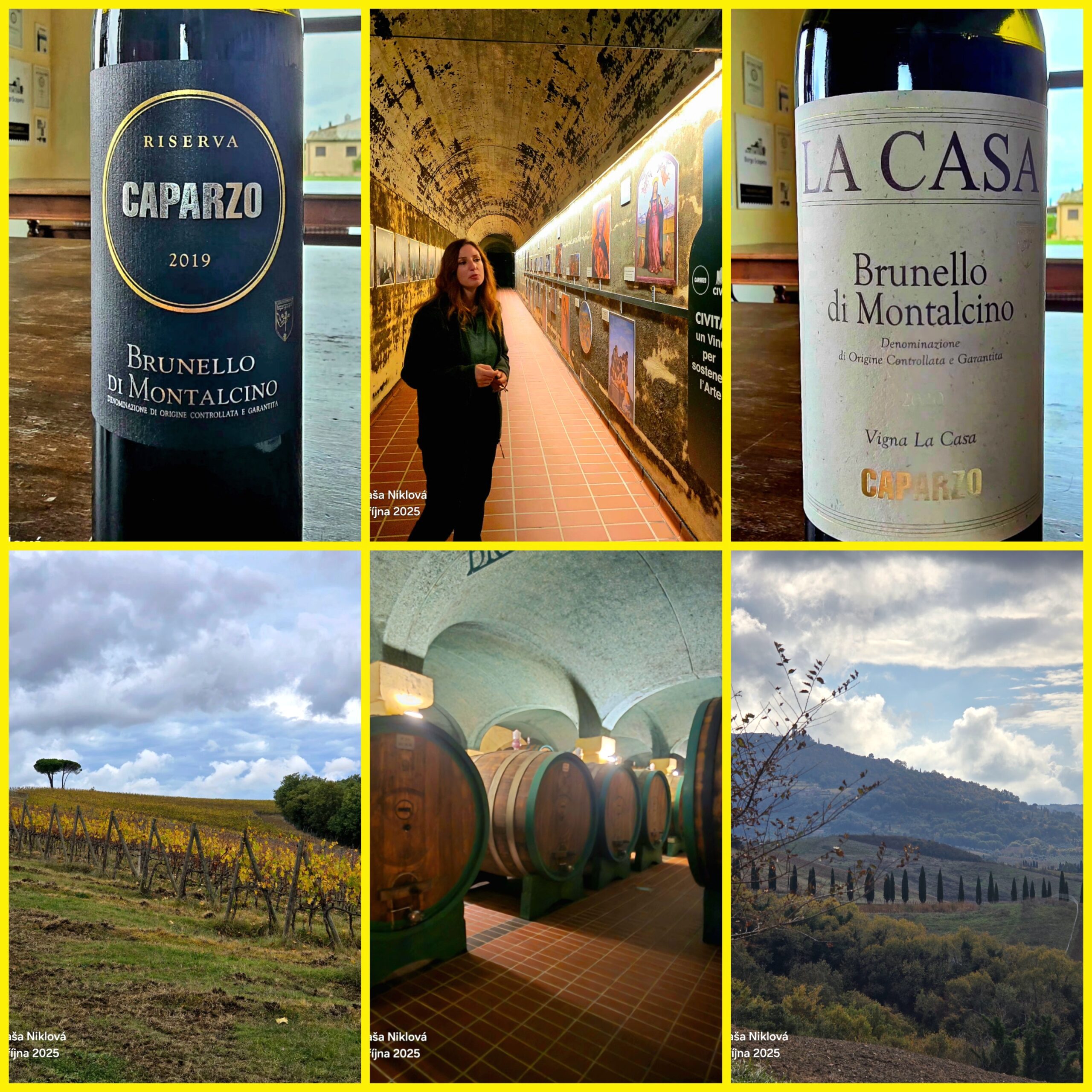
Caparzo, on the other hand, is known for its Brunello Vigna La Casa, a symbol of an approach that blends tradition and innovation.
Despite sharing the same ownership, the two wineries operate independently, with clearly distinct stylistic identities.
Altesino: a crossroads of history and landscape
Both estates are located in the evocative area of Altesino, along the historic Via Francigena, which for centuries connected pilgrims and merchants.
The historic palaces of the Altesi and Tricerchi families once served as key landmarks along this medieval route.
The name Caparzo derives from the ancient term “Cà Pazzo,” while Altesino is linked to the noble Sienese Altesi family, from which both Palazzo Altesi and the surrounding locality take their name.
Two architectures, two identities
Caparzo is a modern estate, defined by contemporary winery architecture with a strong focus on sustainability.
Its renowned art corridor offers breathtaking views over multiple vineyard slopes, merging landscape, wine, and creativity.
Altesino, by contrast, is a 15th-century palace, with a medieval courtyard and central fountain — a quiet, almost timeless place that preserves the charm of Tuscan rural nobility.
The beauty of Altesino lingers in memory as a landscape suspended in time.
Caparzo’s vineyards: the biodiversity of terroirs
Caparzo’s vineyards are spread across several of Montalcino’s most suited areas:
1.Vigna La Casa (Montosoli)
Galestro soils producing mineral and savory wines. The name derives from the farmhouse that once hosted workers of the nearby Palazzo Montosoli.
- Caparzo – North-facing slopes
Pliocene-origin soils, mainly sandy-clay.
3.La Caduta – South-West
Schistous and arenaceous soils, rich in stones, giving freshness and minerality.
4.Il Cassero – Southern Montalcino
Sandy and stony soils.
5.San Piero–Caselle – South-East
Sandy-clay soils contributing ripe fruit notes.
Caparzo’s strength lies in the diversity of its terroirs, allowing flexibility and expression across vintages.
Altesino’s vineyards: the cult of the cru
Altesino focuses its identity primarily on the Montosoli hill, one of the most prestigious crus in the appellation:
1.Montosoli (5 ha, North-East)
Galestro and alberese soils, delivering elegance, complexity, and longevity.
2.Altesino
Surrounding Palazzo Altesi, with southern exposure.
3.Macina (North)
Sedimentary clay-sandy soils.
4.Cerbaia (North-West)
A small parcel near Montosoli.
5.Pianezzine (Sant’Angelo in Colle)
Southern area adding structure.
6.Velona (Castelnuovo dell’Abate)
South-East, known for concentration and ripeness.
Terroir and exposure: Montosoli from two sides
Both estates operate within the Montosoli area, but on opposite sides of the hill:
- Caparzo: South and South-West
- Altesino: North and North-East
This difference creates distinct aromatic profiles:
- Caparzo → structure and power
- Altesino → elegance and freshness
Viticulture and soil management
Caparzo
- Terroir-driven approach based on diversity
- Alternate cover cropping and green manure (legumes)
- Density: around 5,000 vines/ha
- Integrated farming practices
Altesino
- Parcel-focused management (cru philosophy)
- Controlled cover cropping and autumn green manure
- Historical density: 3,500–4,000 vines/ha
- Strong focus on soil vitality and Montosoli’s ventilated microclimate
Both primarily use the spur cordon training system.
Vinification
Caparzo
- Skin maceration: 10–15 days
- More extractive style
Altesino
- Traditional fermentation with temperature control
- Focus on preserving floral notes
Aging
Altesino – elegance
- Large Slavonian oak casks
- Barriques used since 1979 (mainly second and third passage for Palazzo Altesi)
Caparzo – structure
- Casks from 30 to 80 hl (French and Slavonian oak)
- Clay-rich soils → newer oak
- Sandy soils → larger, used casks
In the glass
- Caparzo: more structured, dense, and earthy Brunello
- Altesino: fresher, more elegant and velvety
Two opposing yet authentic interpretations of the same hill.
Conclusion
Caparzo and Altesino show how, even under the same ownership, two distinct philosophies can coexist:
one rooted in the diversity of terroirs, the other in the pursuit of the cru.
Seen from two different sides, the Montosoli hill becomes a natural laboratory of style, identity, and historical memory of Brunello di Montalcino.